
Pull up the product page for a popular AliExpress-sourced item and count how many Shopify stores selling into the broader ecommerce market are using the exact same three photos. It won't take long. Shopify's own AliExpress dropshipping guide tells sellers to check whether a supplier's photos are original before trusting them, because the same handful of manufacturer images circulate across dozens of competing listings for the same product.
That's a real problem before it's an ad problem. Grand View Research puts the global dropshipping market at $583.5 billion in 2026, growing at a 20.7% CAGR through 2033. Thousands of stores are racing into that growth using the same supplier catalog, which means thousands of ads built from the same handful of source images. When your ad and your competitor's ad are the same photo with a different price tag stapled on, price is the only thing left to compete on.
Why this is now an algorithm problem, not just a differentiation problem
Meta's ad-serving system has a name for what happens when an audience sees the same creative too many times: creative fatigue, a problem that shows up across ad categories well beyond dropshipping. Meta's own Ads Manager help documentation defines it plainly. It's what happens when people have seen an ad enough times that they stop responding, and cost per result climbs as a result. Meta's top fix, straight from the same documentation, is Advantage+ creative: automatically producing variations from a single image or video so each person sees a personalized version instead of the identical static file everyone else already scrolled past.
Meta has also been public about pushing advertisers toward creative diversification generally, independent of fatigue on any one specific ad. In its own guidance on optimizing Advantage+ shopping campaigns, Meta recommends maintaining at least 20 diversified ads per campaign and putting 20-30% of total ad budget toward testing new creative. That's Meta's own stated best practice, not a third-party guess.
Now stack a dropshipping-specific problem on top of a fatigue problem that already exists for every advertiser: if fifteen other stores are running Advantage+ campaigns off the identical supplier photo, the underlying visual asset feeding all fifteen accounts is the same file. Diversifying your own ad set doesn't help if your starting material is indistinguishable from a competitor's starting material one search away.
What "the same photo" actually costs you
None of this shows up as a single bad metric. It shows up as three compounding ones:
Rising CPMs on a campaign that used to be efficient. Meta's retrieval system is built to match distinct creatives to distinct audience segments. A supplier photo that's already been matched, scored, and shown across a dozen other advertisers' accounts gives the system less new signal to work with on your account specifically.
Faster fatigue on whatever variation you do launch. If the base asset is generic, even a legitimate new crop or color swap reads as a minor edit of something the algorithm and the audience have both already half-seen, shortening the runway before that variation itself needs replacing.
Zero brand differentiation at the exact moment a shopper is deciding between two identical listings. The product is identical. The price is close. The only remaining signal a shopper has to decide who to trust is what the ad and the store look like.
What you can generate on Coinis instead
You don't need a studio shoot or a sample shipped from China to break out of this. Coinis' Ad Studio already has two tools built for exactly this gap, and they work directly from the supplier photo you already have.
generate_image_templates takes one product photo and builds fresh ad creative across your ad formats (square, story, landscape) rather than reusing the flat catalog shot as-is. It's the fastest way to turn a bare supplier image into something that reads as a built ad, not a scraped listing photo.
Ad variation (revise_creative_variate) goes a step further once you have a base creative running: it anchors to that exact image and changes only what you tell it to, background, lighting, prop, setting, while keeping the product and composition identical. This is the tool for producing the kind of materially different variation Meta's own fatigue guidance calls for, without reshooting or re-sourcing anything.
Worked example: one supplier photo, three distinct ad angles
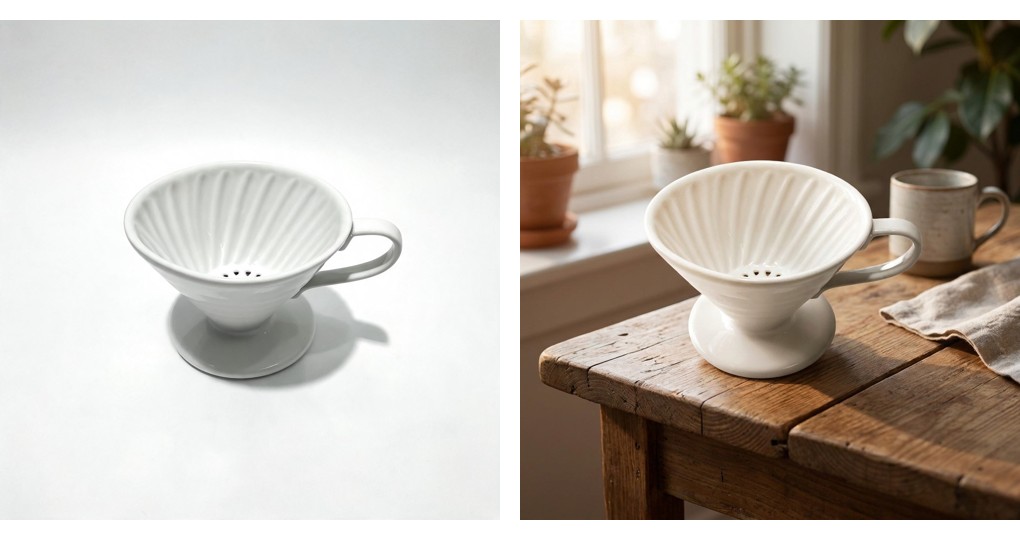
Take a generic product photo, the kind that ships with every AliExpress listing: flat white background, harsh flash lighting, centered product, nothing else in frame. Here's a variation brief built to keep the product recognizable while giving three different audience segments something visually distinct to respond to:
Source: supplier product photo, plain white background, flat studio flash lighting, product centered.
Variation 1: warm lifestyle setting, product in use on a wood table with soft window light, same product angle and scale as source.
Variation 2: bold solid-color studio backdrop matching the store's brand accent color, dramatic single-source side light, same product angle and scale as source.
Variation 3: outdoor natural-light setting with visible context (desk, shelf, or hands holding the product), same product angle and scale as source.
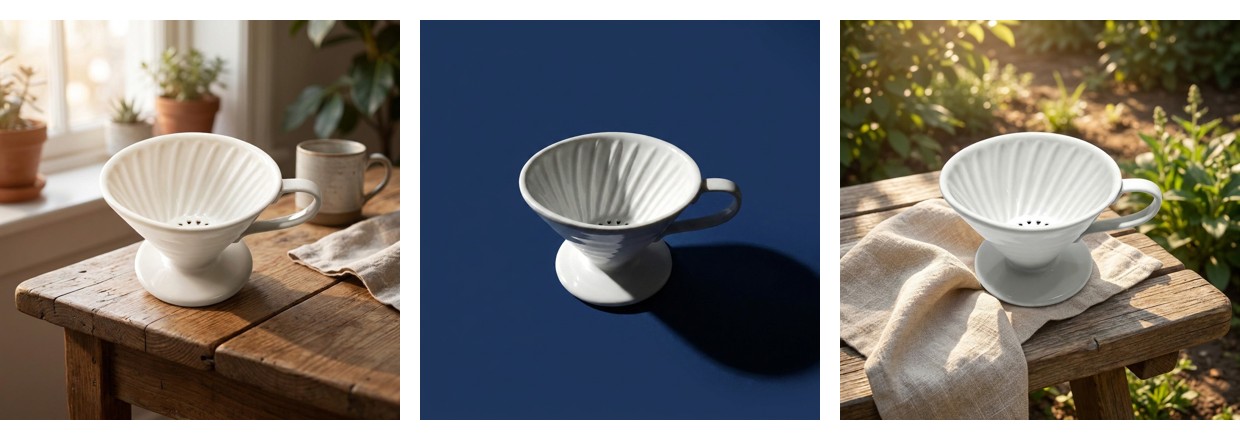
Three ads out of one source photo, each one visually distinct enough to count as a genuinely new creative to Meta's retrieval system, none of them requiring a new supplier sample, a studio booking, or a design hire.
Building a repeatable pipeline instead of a one-time fix
A single round of variations solves this week's fatigue. The dropshipping model adds new products constantly, which means the same generic-photo problem recurs on every new listing unless there's a standing process for it. A workable loop for a small team:
- New product import. Pull the best available supplier photo, the highest-resolution one, ideally without a competitor's watermark or text overlay baked in.
- First ad build. Run it through
generate_image_templatesto get a properly formatted, non-generic starting creative across your ad sizes, rather than uploading the raw supplier shot. - Variation cadence. As that base creative ages toward fatigue, or before launching in a second market or audience segment, run it through the variation tool with a fresh background/lighting/prop brief instead of pulling another identical supplier photo.
- Repeat per product. Because the whole loop runs off the photo you already have, it scales the same way whether you're managing five SKUs or five hundred.
The stores that survive dropshipping's thin margins, the model has notoriously low long-term profitability precisely because price is usually the only lever anyone pulls, are the ones that found a second lever. Visual differentiation, built at the same speed the catalog grows, is that lever.
FAQ
Do I need the physical product to generate a new ad variation? No. Both tools work from the photo you already have, whether that's your own product shot or the supplier's listing image. Nothing needs to be reshot or reordered.
Is reusing a supplier's product photo directly in an ad a problem? Many suppliers do permit resellers to use their listing photos, but using the identical file every other store selling that product also uses is a differentiation and ad-performance problem even where it's permitted, not a legal one on its own. Generating a new, distinct image from that photo as a reference solves the differentiation problem directly.
How is a "variation" different from just cropping or recoloring the same image in Canva? A crop or a filter is still recognizably the same base photo. A generated variation changes the actual scene, background, lighting, setting, while keeping the product and composition anchored, which is what gives Meta's system and a scrolling audience something genuinely new to evaluate.
How often should a dropshipping account be refreshing ad creative? Meta's own guidance points to maintaining at least 20 diversified ads per active campaign and dedicating 20-30% of ad budget to testing new creative on an ongoing basis, not as a one-time fix when an ad starts declining.
Where does this fit if I'm running the same product across multiple stores or markets? Pair the variation workflow with Coinis' resize/translate tools to take a winning variation and reformat it for a different market or placement without generating an entirely new creative from scratch.
Sources
- Shopify, "AliExpress Dropshipping in 2026 With Shopify" (2026-06-30): https://www.shopify.com/blog/117607173-the-definitive-guide-to-dropshipping-with-aliexpress
- Grand View Research, "Dropshipping Market Size, Share, Growth Report, 2026-2033": https://www.grandviewresearch.com/industry-analysis/dropshipping-market
- Meta Business Help Center, "Creative Fatigue Recommendations in Meta Ads Manager": https://www.facebook.com/business/help/1346816142327858
- Meta for Business, "Three steps to optimize your performance with creative diversification": https://www.facebook.com/business/news/three-steps-to-optimize-your-performance-with-creative-diversification

Isidora Matovic
Author
Social media enthusiast and a full time researcher. She takes digital presence very seriously and that is why you are always in touch in what is going on with us! Follow us for more posts like this.