
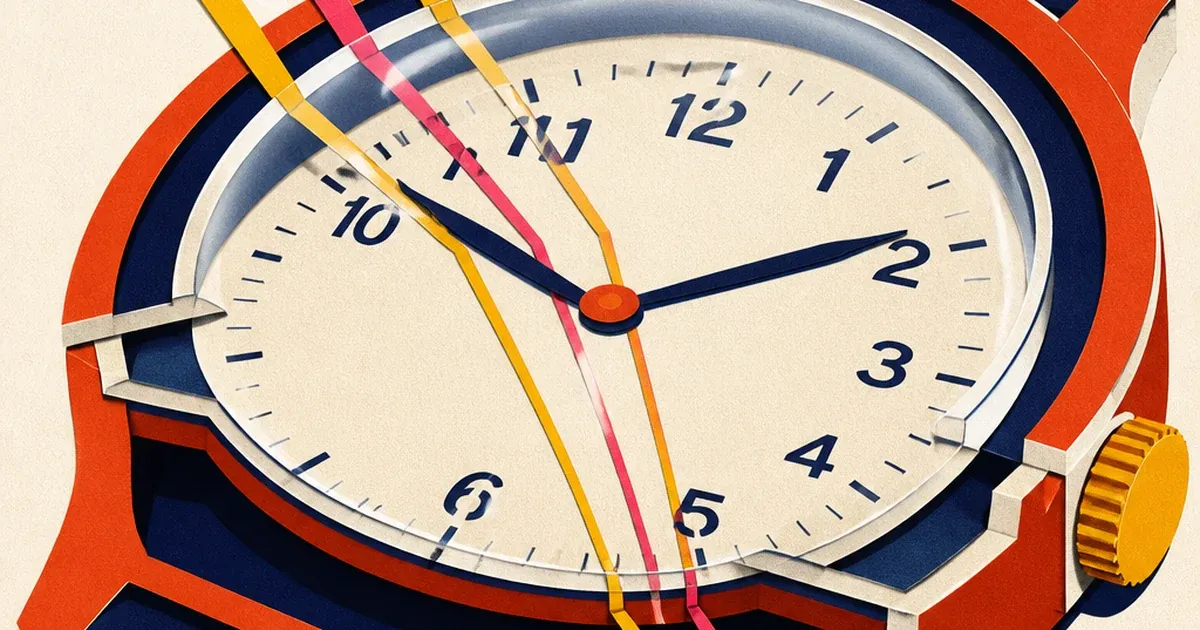
Look closely at a watch ad shot from a slight angle and something is often off. The minute track curves where it should run straight. A numeral near the edge of the dial looks stretched or doubled. None of that is a bad crop or a shaky hand. It's the crystal doing exactly what a curved piece of glass does to light.
The dome on top of the dial is a lens, not just a cover
Most watches, especially dive watches and higher-end pieces, use a domed crystal, sapphire or mineral glass shaped like a shallow curve rather than a flat pane. A domed shape does real optical work: it bends light passing through it, the same way a magnifying glass or a fishbowl does. Photography and watch-technical writers who cover crystal geometry describe this directly. A single-domed crystal, flat on the inside and curved on the outside, "can be used to good effect to magnify the view," and "the greater the curvature of the dome the more limited the viewing angle" before the distortion becomes obvious.
Shoot that watch dead-on, straight through the center of the dome, and the effect is minimal. Shoot it from almost any other angle, which is how most product photography actually happens, tilted for a hero shot, angled to show the case profile, and the dome refracts the dial underneath it unevenly. Numerals near the crystal's edge stretch or curve. A double-domed crystal, common on luxury pieces because it holds a consistent thickness around its whole curve, behaves more predictably, but even it introduces a visible bend once the camera isn't perfectly centered.
Why this defect is specific to watch retail
No other product category ships with a built-in curved-glass lens sitting directly over the thing the ad is supposed to sell. A jewelry ring's polished metal produces a specular hotspot, a flat blowout of light. A phone screen mirrors the studio setup back at the camera. Neither of those bends the actual geometry of the product underneath. A watch's dome does, because the dial's printed numerals and hands sit behind a genuine refractive surface, not a flat window.
The category this hits is large. IBISWorld's Jewelry Stores industry report puts US industry revenue at an estimated 62.1 billion dollars in 2026, the channel through which most branded and luxury watches reach retail buyers alongside jewelry. Every one of those retailers eventually needs a dial shot clean enough to run as an ad, and a domed crystal fighting the camera at anything but a dead-center angle is a repeatable, fixable flaw sitting in a large share of that library.
The fix works on the photo you already have
Re-shooting from a perfectly centered angle on every product isn't realistic for a catalog of dozens or hundreds of references, and centering the camera doesn't fully solve it anyway since a hero shot usually wants some angle to show the case. A targeted correction pass on the existing photo can straighten the dial geometry back to what the watch actually looks like, without touching the case, band, or crystal reflections that give the shot its depth.
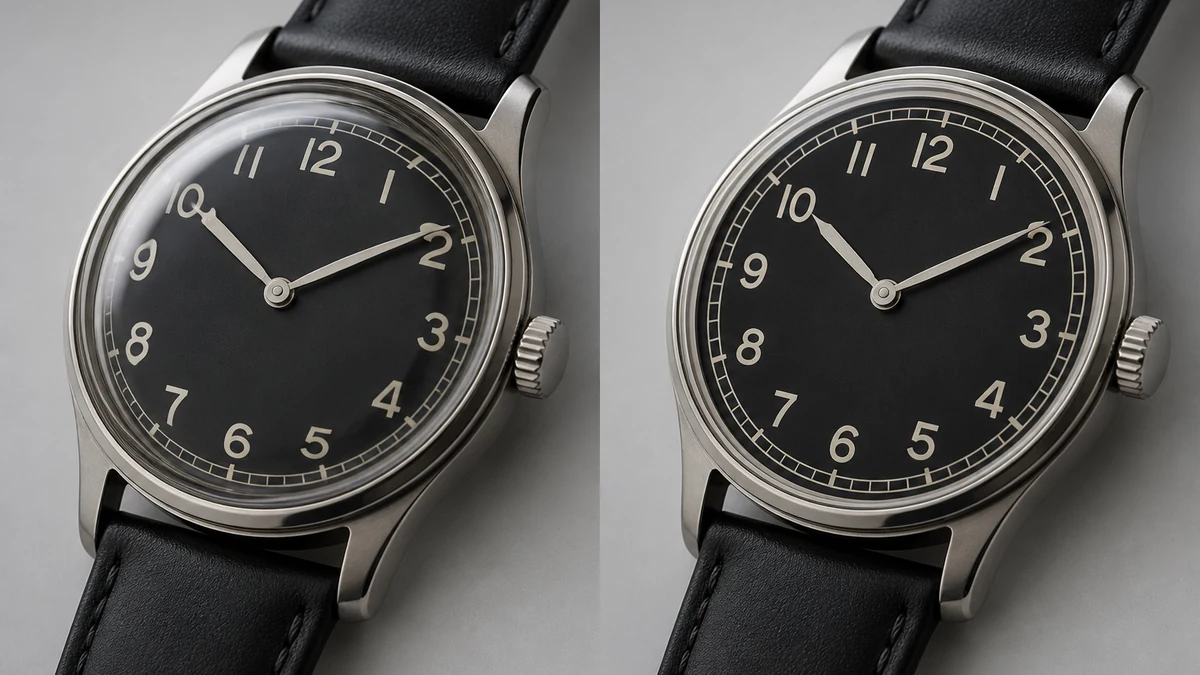
Illustrative still, not the live render. mcp.coinis.dev access was down at publish time, so this generic AI-generated before/after substitutes for the real enhance_asset_proxy repair described above. The real render will replace this still in a future update once the connection is restored.
The mask stays tight to the dial and crystal area, described only by the target state (dial rendered flat and true, numerals correctly positioned), never by naming the defect itself. Naming the flaw in a correction prompt is a confirmed way to get a model to invent an unrelated feature instead of just correcting the geometry, so the fix describes the destination, not the problem.
Once that corrected dial shot exists, the same source needs to cover every placement a watch retailer actually runs: square for feed ads on Facebook and Instagram, vertical for Stories and Reels, landscape for display and YouTube pre-roll. Building all three from one corrected photo keeps the dial looking identical everywhere the ad shows up, instead of re-fighting the same distortion in three separate crops. The same one-photo-to-every-ad-size workflow already covered for other verticals applies here.
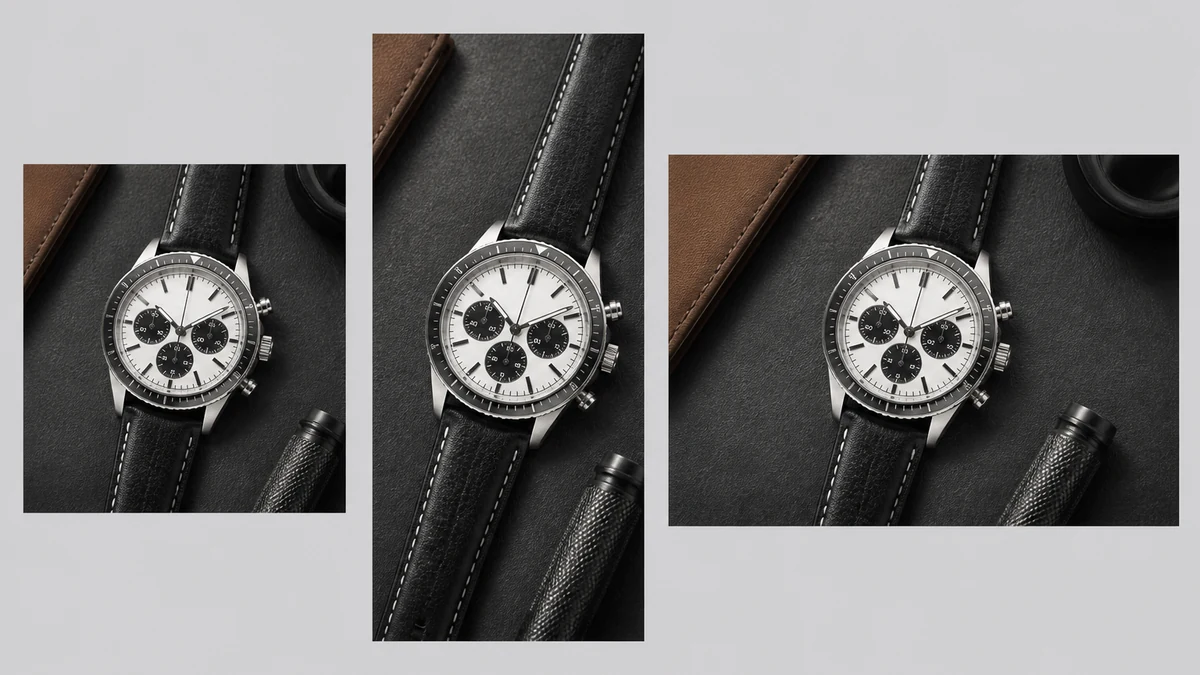
Illustrative still, not the live render. mcp.coinis.dev access was down at publish time, so this illustrative fan-out substitutes for the real generate_image_templates render described above. The real render will replace this still in a future update once the connection is restored.
Turn this into a launch-ready ad on Coinis
A straightened dial shot is more than a cleaner catalog photo, it's a ready ad shell. Coinis's marketplace runs the same photo-repair pipeline already demonstrated for other verticals, and Ad Studio turns the corrected image straight into a launch-ready ad from a template instead of leaving the layout work for later. Fix the dial once, pick a template, launch across every size the campaign needs.
If your catalog has other dial shots fighting the same dome, dive watches and thicker double-domed pieces are usually the worst offenders, the same fix applies across the whole library. The watch category sits alongside jewelry on Coinis's industry pages, and the underlying refractive-geometry mechanism is a genuinely different optical problem from the camera-lens vignetting covered elsewhere on this blog.
FAQ
Why does my watch dial look curved or stretched in photos? Most watch crystals are domed, not flat, and a domed shape acts as a lens that bends light passing through it. Shot at any angle other than dead-center, that bend visibly distorts the numerals and minute track printed on the dial underneath.
Does a flat crystal have this problem too? Much less. A flat crystal is easily manufactured from a single sheet and introduces minimal optical distortion, which is why it's common on cheaper watches. The distortion issue is specific to domed and double-domed crystals, the geometry favored on dive watches and higher-end pieces for its durability and viewing-angle benefits.
Can I avoid this by just shooting straight-on? Partially. A dead-center angle through the dome minimizes the bend, but most hero shots want some angle to show the case profile and crystal reflections, which is exactly when the distortion becomes visible. A photo correction pass solves it without limiting every shot to one flat angle.
Is this the same as glare or a specular hotspot on the crystal? No. Glare is light bouncing directly off the crystal's surface as a bright highlight. This is the crystal's curved shape bending the image of the dial sitting underneath it, a geometry problem, not a reflection problem, and the fix is different for each.
What ad sizes should a watch retailer generate from one fixed photo? Square for feed placements, vertical for Stories and Reels, and landscape for display and pre-roll cover the placements most watch retailers run. Generating all three from the same corrected dial shot keeps the watch looking identical across every ad a prospect sees.
Sources
- SNGLRTY (Singularity Watches), "Watch Crystals, Domed, Double Domed and Atomic Structure," accessed 2026-09-23: https://www.snglrtywatch.com/all/how-watches-work/watch-crystals-domed-double-domed-and-atomic-structure/
- IBISWorld, "Jewelry Stores in the US Industry Analysis, 2026," accessed 2026-09-23: https://www.ibisworld.com/united-states/industry/jewelry-stores/1075/

Isidora Matovic
Author
Social media enthusiast and a full time researcher. She takes digital presence very seriously and that is why you are always in touch in what is going on with us! Follow us for more posts like this.